Basement Waterproofing Calgary: Practical Guide
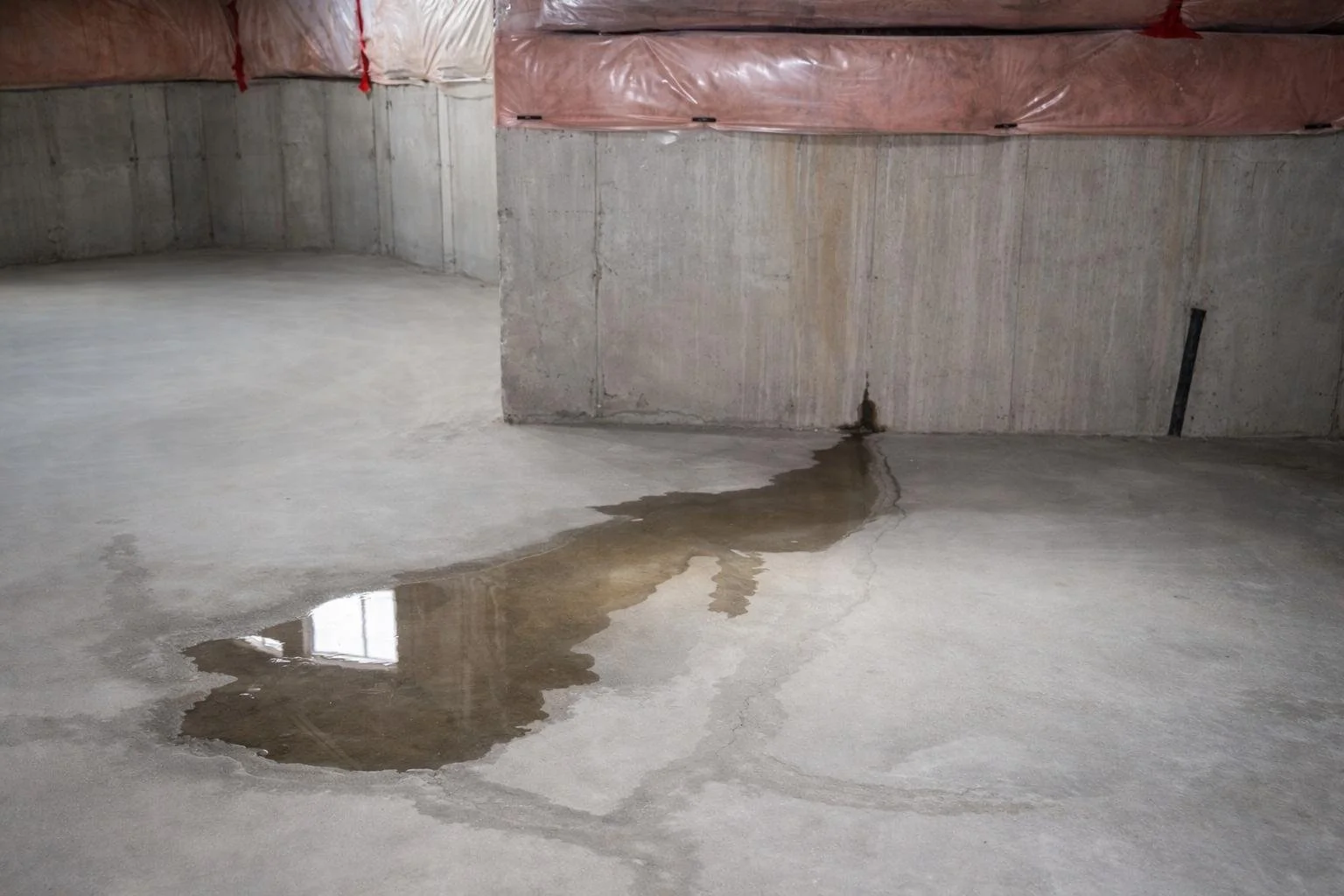
Water leakage from concrete foundation wall crack in unfinished basement
Identify the Cause, Choose the Right Solution
Basement waterproofing in Calgary often becomes important long before homeowners notice a damp spot or catch that first musty smell. Calgary's clay-heavy soil holds water rather than absorbing it. Freeze-thaw cycles quietly widen hairline cracks into real ones. Spring snowmelt saturates ground that has nowhere to drain. Hydrostatic pressure builds, and water finds the path of least resistance — your foundation.
The good news is that once the source of the problem is identified, choosing the right solution becomes much easier.
What is waterproofing?
Basement waterproofing is the process of keeping water and excess moisture out of the basement. Depending on the issue, it can include improving grading, extending downspouts, repairing foundation cracks, installing drainage systems, adding a sump pump, sealing vulnerable entry points, and controlling indoor humidity.
Warning signs of basement water problems
Recognizing a moisture issue early can save a homeowner significant time, stress, and repair cost. These are some of the most common warning signs and what they often mean.
Wet walls or damp spots
Moisture may be moving through concrete or entering through cracks, joints, or poorly managed drainage around the home.Small puddles or water seepage
This often happens when hydrostatic pressure pushes water through the foundation wall or floor, or when drainage around the home is underperforming.Musty smell
A persistent musty odour usually points to trapped moisture, poor airflow, or hidden mould behind finished surfaces.Mould or mildew
This is often a sign of ongoing dampness, condensation, or consistently high humidity in the basement.White chalky marks on concrete
This is usually efflorescence, which happens when water moves through concrete and leaves mineral deposits behind. It is a good sign that moisture is actively passing through the foundation.Condensation on pipes or cold walls
This is usually related to indoor humidity rather than groundwater intrusion, especially in poorly ventilated basements.Cracks or bowed walls
These may point to water pressure building against the foundation. Small cracks can become larger over time and should be assessed before they turn into bigger problems.Increased insect activity
Damp, dark spaces attract pests. A humid basement can create the right conditions for infestations.
Why basement waterproofing matters before you renovate
Moisture can damage framing, insulation, drywall, flooring, trim, furniture, and stored belongings. If you are planning a basement renovation or basement development, unresolved water issues can lead to expensive repairs later and shorten the life of the finished space. Waterproofing first helps protect the investment you are about to make.
It also affects comfort. Even when there is no visible leak, high humidity, mildew, and musty odours can make a basement feel unpleasant to use. A dry, properly protected basement is easier to finish, healthier to live in, and much more enjoyable day to day.
Types of waterproofing
The right waterproofing solution depends on the root cause of the problem. Treating symptoms without fixing the source is one of the main reasons basement water problem solutions fail.
In many Calgary homes, the best results come from using more than one approach.
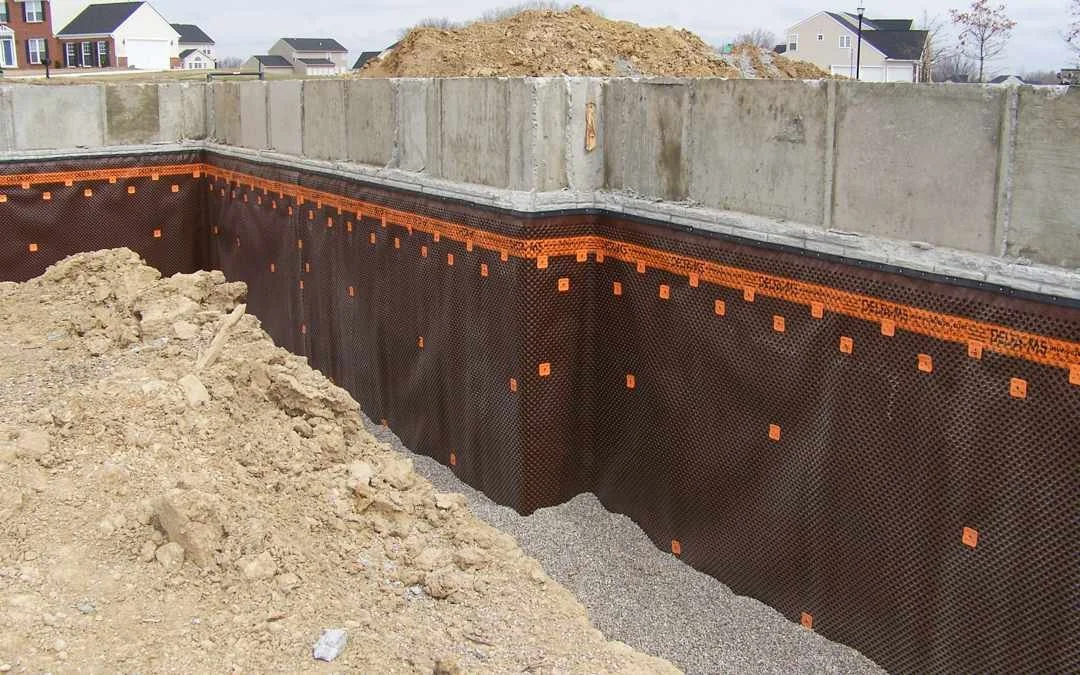
Brown dimpled foundation waterproofing membrane
1. Exterior water management
This is often the first and most important place to start because many basement water problems begin outside.
Exterior water management can include cleaning eavestroughs, extending downspouts away from the home, correcting grading so water slopes away from the foundation, creating swales to redirect surface water, and improving drainage around window wells, walkways, and other problem areas.
Where surface drainage is not enough, a French drain system combined with a sump pump may be the most effective long-term solution. If water is collecting near the foundation, interior-only products will not fully solve the problem.
2. Crack repair and sealing entry points
Foundation cracks, service penetrations, basement windows, and slab-to-wall joints are all common entry points for water.
Targeted crack repair and sealing can be very effective for isolated moisture problems, especially when paired with improved drainage outside.
3. Exterior foundation waterproofing
For serious or recurring seepage, exterior foundation waterproofing is one of the most complete solutions available.
This may involve excavation, repairing damaged wall areas, applying waterproof membranes, installing drainage board, and improving the backfill around the home. The goal is to stop water before it reaches the inside of the basement. Projects of this scale often require a City of Calgary permit — something we handle as part of the process.
4. Interior drainage and sump systems
When exterior excavation is not practical because of landscaping, structures, or limited access, an interior drainage system and sump pump can help collect and redirect water before it floods the basement.
These systems manage water rather than fully stopping it from reaching the foundation, which is an important difference. In the right situation, they can still be a very effective solution.
5. Interior coatings and sealers
Silicate sealers, waterproof coatings, waterproof paint, and hydraulic cement can help with minor dampness or small localized repairs.
They can be useful in the right situation, but they are usually not enough on their own if the real issue is poor drainage, hydrostatic pressure, or exterior water buildup.
6. Humidity control and ventilation
Not every damp basement has a foundation leak. Some basements feel wet because of trapped humidity, poor airflow, and condensation.
In these cases, dehumidifiers, improved ventilation, airflow improvements, and pipe insulation can make a big difference. This is especially important in finished basements where moisture can become trapped behind walls or under flooring.
What does basement waterproofing cost in Calgary?
The cost of waterproofing depends on the source of the problem and the solution required.
Here are some general planning ranges:
| Solution | Approximate Cost Range |
|---|---|
| Grading correction or downspout extension | $200 – $800 |
| Crack injection repair | $500 – $1,500 |
| Interior drainage system with sump pump | $3,000 – $8,000 |
| Partial exterior waterproofing | $5,000 – $15,000 |
| Full exterior excavation and membrane system | $15,000 – $35,000+ |
These are general ranges only. Actual cost can vary based on site access, soil conditions, age of the home, foundation condition, severity of seepage, and overall scope of work.
A simple grading fix on a newer home is very different from full excavation on an older property. The most reliable way to get an accurate number is to identify the root cause first. In many cases, that is also the most cost-effective path, because misdiagnosed problems often end up being fixed twice.
Already have a finished basement? Start here
The most important rule is simple: do not cover a moisture problem with new finishes.
Installing drywall, flooring, or trim over a damp area does not solve the issue. It hides it while the damage continues underneath.
If you already have a finished basement and you are seeing signs of moisture, start with these steps.
Check outside first
Many finished basement moisture problems begin with exterior drainage. Review grading, downspouts, eavestroughs, and window wells before opening walls or replacing finishes inside.
Target the entry point
If water is entering in one specific area, crack repair or sealing may solve the issue before more damage happens. If seepage keeps returning, drainage improvements or a sump pump upgrade may be needed.
Address damaged materials properly
If drywall, insulation, or flooring is already wet or mouldy, the affected area usually needs to be opened, fully dried, and rebuilt after the water source has been resolved.
For mild dampness or mildew, some practical steps may also help:
Run a dehumidifier to reduce humidity and musty smells
Insulate cold water pipes to prevent condensation from dripping
Improve airflow in storage rooms and utility spaces
Clean gutters and extend downspouts away from the house
Make sure exterior grading slopes away from the foundation
Final thoughts
Calgary’s soil conditions, freeze-thaw cycles, spring snowmelt, and drainage challenges can all put pressure on a basement foundation. The good news is that these problems are well understood, and when the right solution is matched to the real cause, a dry and lasting basement is absolutely achievable.
Basement moisture always has a root cause. At Remarkable Projects, we help identify what is actually causing the issue and recommend practical, proven waterproofing solutions tailored to your home. Keeping your basement dry is not something we add on at the end. It is part of how we build from the start.
Concerned about moisture issues in your basement? Get in touch with Remarkable Projects for practical advice, honest recommendations, and waterproofing solutions that work.